
Why Shower Grout Keeps Turning Black (And How to Stop It)
A scientific trade explanation of why shower grout turns black with stubborn mould, why bleach only masks the problem, and how non-porous epoxy provides a lasting solution.
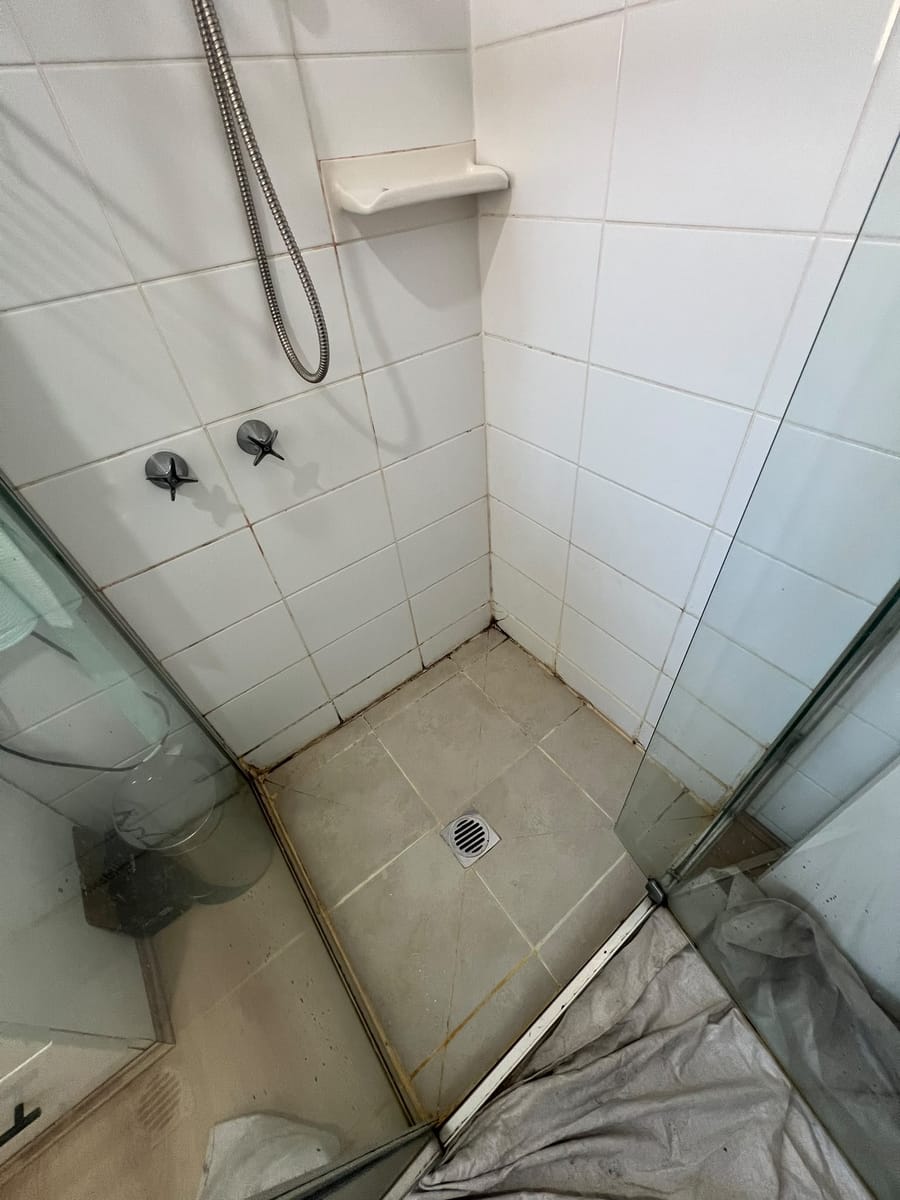
The Biology of Black Mould in Melbourne Bathrooms
Few household sights are as frustrating as stepping into a shower and seeing dark, mottled black stains spreading across the grout lines. Homeowners often spend hours scrubbing with concentrated bleach, mould sprays, and stiff brushes, only to watch the black discolouration return within weeks.
To understand why mould persists, one must understand its biology. The black patches commonly found in showers are fungal colonies—most frequently species of Cladosporium, Aspergillus, and Aureobasidium. Fungi require three fundamental elements to thrive: warmth, continuous moisture, and an organic food source. A domestic shower in Melbourne provides all three in abundance.
The Sponge Effect: Why Porous Cement Grout Harbours Fungi
The true culprit behind recurring black mould is the porous nature of standard cement grout. Cementitious grout contains microscopic capillaries. When you shower, water soaks deep into these channels. In high-use family bathrooms, showers rarely stay dry long enough for the core of the grout joint to fully dehydrate.
Furthermore, as you shower, dead skin cells, body fats, soap residues, and shampoo conditioners are washed across the tiles. Cement grout absorbs this organic slurry like a sponge. Fungal mycelium (the root network of the mould) penetrates deep into the joint capillaries, feeding on the absorbed nutrients in a dark, damp environment. Plant-based moisturising oils, organic shea butters, and natural bar soaps commonly found in modern body washes are rich in fatty lipids that accelerate fungal mycelium growth, transforming clean tile joints into an active biological culture.
The Bleach Illusion: Why Chemical Sprays Fail
When you spray chlorine bleach onto black grout, the discolouration appears to vanish almost instantly. Homeowners assume the mould has been killed. In reality, chlorine bleach merely bleaches the melanin pigment that gives the mould its black colour, rendering it temporarily transparent.
Chlorine molecules have high surface tension and cannot penetrate deep into the microscopic pores of cement grout. The water component of the bleach solution soaks in, but the active chlorine remains on the tile surface. The fungal roots deep within the joint remain alive. Fed by the residual water, the mould regenerates its black pigment within two to three weeks.
Even worse, repeated application of acidic or harsh alkaline bleach dissolves the cement matrix, enlarging the pores and making future mould colonisation even faster and more entrenched.
Bathroom Ventilation Physics: CFM Ratings and Airflow
Ventilation plays a huge role in fungal colonisation. Many Melbourne bathrooms have exhaust fans that are either undersized or operated incorrectly. A standard bathroom requires an exhaust fan rated to extract at least 50 litres of air per second (or roughly 15 to 20 air changes per hour).
Crucially, an exhaust fan cannot extract air from a sealed vacuum. If the bathroom door and window are tightly closed during a shower, the fan starves of intake air and merely spins without moving steam. Leaving the bathroom door cracked open by 10 to 15 millimetres creates an intake draft that sweeps steam out of the ceiling fan. Furthermore, running the fan for 15 minutes after showering is vital to dry out residual room humidity.
The Lasting Trade Solution: Mechanical Removal & Non-Porous Epoxy
Preventing recurring black mould requires breaking the cycle at its physical foundation: eliminating the porosity and embedded fungal roots.
The trade solution involves mechanically cutting out the contaminated cement grout using oscillating diamond tools to a depth of 3–4mm. The exposed joints are vacuumed with HEPA extraction and treated with targeted fungicidal agents to sterilise the adhesive bed.
Once dry, the joints are repacked with two-part epoxy grout. Because cured epoxy is completely non-porous, moisture and organic grime cannot penetrate beneath the surface. Mould has nowhere to root. Any superficial mildew that forms on surface soap scum simply wipes off with a sponge.
When Black Grout Indicates a Failed Waterproofing Membrane
In some cases, black grout along the lowest row of shower wall tiles or around the floor waste indicates that moisture is permanently trapped beneath the tiles in a waterlogged screed. If the sub-tile waterproofing membrane has failed, water cannot drain away, creating chronic dampness.
If the grout feels soft, muddy, or sandy when probed with a small screwdriver, or if tiles sound hollow, the wet area must be evaluated for membrane failure rather than treated as a routine surface mould issue.
Honest Trade Advice: Waterproofing Membranes vs. Regrouting
Regrouting and perimeter silicone replacement restore damaged, porous, or mouldy joints. However, regrouting addresses grout-level water ingress but cannot repair or restore a failed waterproofing membrane. Under Australian building standards (AS 3740), internal waterproofing membranes sit beneath the screed and tile bed. If that membrane or structural substrate has failed, regrouting alone cannot fix an underlying leak. We provide clear, honest assessments from photos and on-site checks so you only pay for what actually solves the problem.
Trade Summary
Black mould returns because porous cement grout traps water and organic food deep beneath the surface. Upgrading to non-porous epoxy grout eliminates the root problem by cutting off the moisture and organic food supply that mould requires to survive. Contact Tile Seal Pro Regrout for an honest assessment and transparent quote.