
When Regrouting Will and Won’t Fix a Leaking Shower: Honest Trade Diagnosis
An honest trade guide explaining exactly when shower regrouting will resolve water leaks, when a failed membrane requires rebuilding, and how to diagnose the difference.
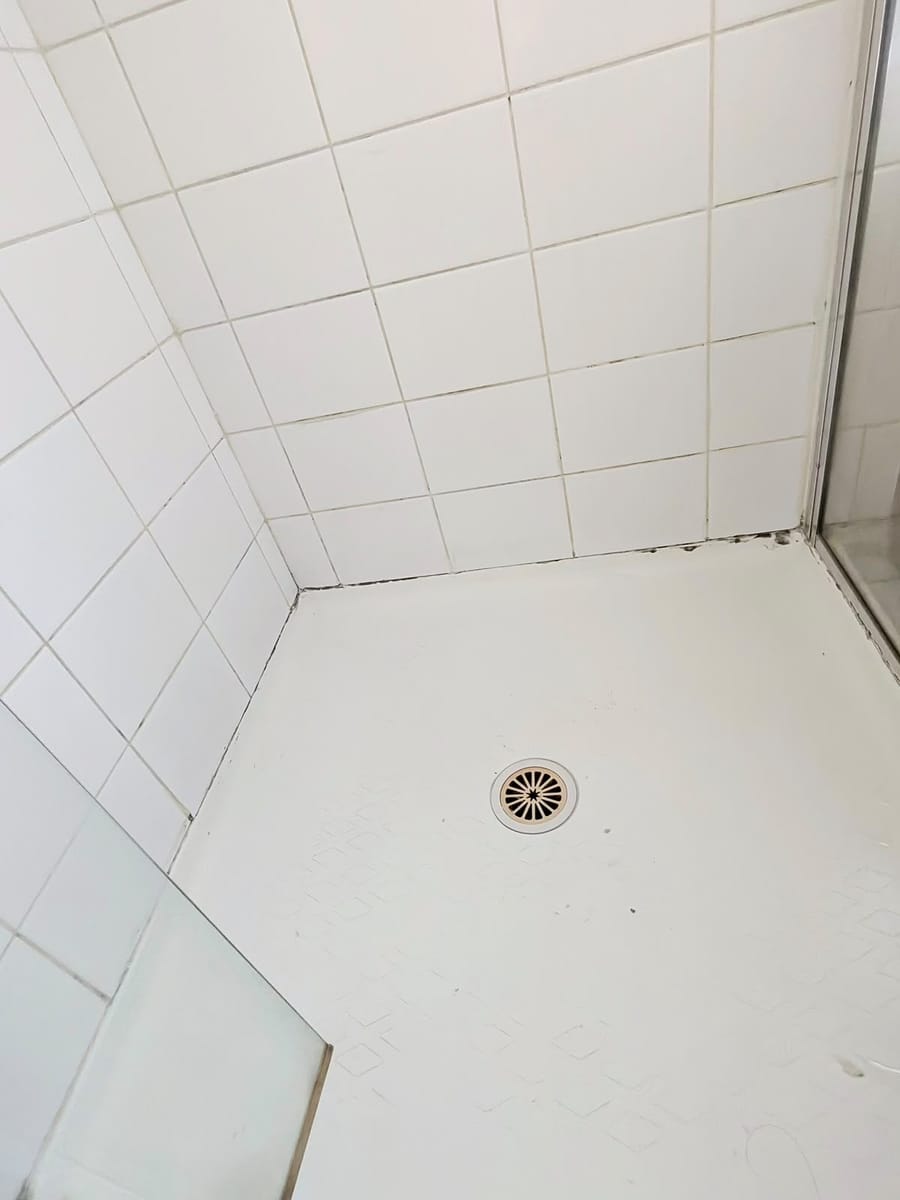
The Anatomy of a Shower Wet Area: Wear Layer vs Membrane
Homeowners facing water damage outside their bathroom—such as peeling paint on a hallway wall, damp carpet in an adjoining bedroom, or water staining a downstairs ceiling—are frequently presented with conflicting advice. Some contractors claim every leak requires a $15,000 full bathroom demolition, while others promise a $300 quick patch will solve everything permanently. To understand the truth, one must understand how Australian showers are built.
A residential shower consists of three primary functional layers. At the base lies the structural substrate (concrete slab or compressed cement sheet over timber floor joists). Directly above this sits the Class III elastomeric waterproofing membrane, which extends across the floor and up the walls to form a watertight tank. Above the membrane sits the screed and tile adhesive bed, capped by the visible ceramic or porcelain tiles and grout joints.
The tiles and grout are the wear layer: they protect the membrane from mechanical damage and provide an attractive, cleanable finish. However, grout is not the sole waterproofing barrier. When a shower leaks, diagnosing which layer has failed dictates whether regrouting is a genuine long-term trade remedy or a temporary waste of money.
Scenario 1: When Regrouting DOES Fix the Leak
In a significant percentage of leaking showers, the underlying waterproofing membrane is completely intact, but water is escaping because the wear layer has failed at critical perimeter intersections. Over 5 to 15 years, standard cement grout erodes from hot water and cleaning chemicals, leaving joints sandy, pitted, and fractured.
At the same time, normal building settlement and thermal cycling cause traditional silicone caulking along internal wall-to-wall corners, wall-to-floor junctions, and shower screen perimeters to tear. When shower splash enters these gaps, water bypasses the tile surface and floods the adhesive bed.
Tile adhesive is porous and behaves like a sponge wick. If water enters the adhesive layer in large volumes, it tracks laterally beneath the tiles, traveling over the edge of the shower hob or past the screen channel and soaking directly into adjacent timber skirting boards and bedroom carpet underlay. In this scenario, mechanically cutting out the old grout, drying the joints, and repacking with non-porous epoxy grout and flexible sanitary silicone seals the breach and halts the leak completely.
Scenario 2: When Regrouting Will NOT Fix the Leak
Regrouting is not a miracle cure and cannot replace a ruptured waterproofing membrane. If water has penetrated beneath the tiles and the sub-tile membrane itself has torn, split, or was never installed with proper bond breakers, regrouting alone will not permanently solve the leak.
Common causes of membrane failure include: tradespeople puncturing the membrane with screws when installing shower screen frames; building settlement that stretches the membrane beyond its elongation limit across a corner; or chemical degradation from long-term trapped water in poorly drained screeds. When the membrane is punctured, water tracks directly through the subfloor into ceiling cavities downstairs.
In this situation, water will continue to migrate through microscopic gaps, plumbing penetrations, or future expansion movement. Applying fresh grout over the top is merely masking an active structural defect. An honest tradesperson will test the shower, identify the membrane failure, and explain that the affected tiles must be lifted to reinstate the waterproofing barrier.
How Experienced Tradespeople Diagnose the Difference
Accurately identifying the source of a shower leak requires systematic elimination rather than guesswork. When evaluating a leaking shower, we perform several distinct diagnostic checks:
First, we isolate the plumbing water supply. If a copper or PEX pipe inside the wall cavity has a pinhole pressure leak, water will escape 24 hours a day, 7 days a week, regardless of whether the shower is in use. We check water meter dials and inspect wall cavities for continuous hissing or dampness.
Second, we inspect the shower screen frame and drainage waste. Many apparent shower leaks are simply splash water escaping beneath an unsealed shower screen track or tracking past a faulty drain flange.
Third, we test tile adhesion. We tap tiles across the floor and lower walls with an inspection tool. Solid tiles produce a sharp, high-pitched click; tiles that have debonded from moisture-saturated adhesive produce a distinct hollow, drum-like thud. If multiple tiles are drummy, regrouting cannot proceed until tile bedding is rectified.
The Fatal Flaw of DIY "Skim-Coating" Over Old Grout
A dangerous shortcut frequently seen in rental properties and DIY repairs is "skim-coating"—spreading a thin layer of new grout or sealant directly over old, dirty grout without mechanical removal. This practice never works.
New grout requires a minimum mechanical key depth (typically 3 to 4 millimetres) to lock between tile edges. When applied over existing grout, the new layer is paper-thin (less than 1mm). Within weeks of exposure to hot shower water and foot pressure, the thin skim-coat flakes off in chunks, leaving an even rougher surface that traps mould and accelerates water penetration.
Professional regrouting requires dedicated mechanical extraction tools to cleanly cut out old grout down to sound depth, HEPA vacuuming to remove all grit, and anti-fungal treatment before fresh compound is compacted into the joint.
What Happens If You Ignore a Leak and Delay Action?
Water trapped behind bathroom tiles does not simply evaporate. Over time, trapped moisture rots structural timber studs, softens floor joists, and creates ideal environmental conditions for subterranean termite infestations in Victoria.
Furthermore, continuous dampness in enclosed wall cavities fosters aggressive black mould colonies that release airborne mycotoxins into adjacent bedrooms and living areas, posing health risks to family members with asthma or allergies.
Honest Trade Advice: Waterproofing Membranes vs. Regrouting
Regrouting and perimeter silicone replacement restore damaged, porous, or mouldy joints. However, regrouting addresses grout-level water ingress but cannot repair or restore a failed waterproofing membrane. Under Australian building standards (AS 3740), internal waterproofing membranes sit beneath the screed and tile bed. If that membrane or structural substrate has failed, regrouting alone cannot fix an underlying leak. We provide clear, honest assessments from photos and on-site checks so you only pay for what actually solves the problem.
Trade Summary
A targeted shower regrout and reseal is the ideal, cost-effective solution when tile adhesion and sub-tile membranes are intact. If you suspect your shower is leaking, upload clear photos to Tile Seal Pro Regrout for an objective, honest trade evaluation.