
Why Shower Corners Should Use Silicone Instead of Grout
An authoritative trade explanation of why internal shower corners are movement joints that must be sealed with neutral-cure sanitary silicone rather than rigid cement grout.
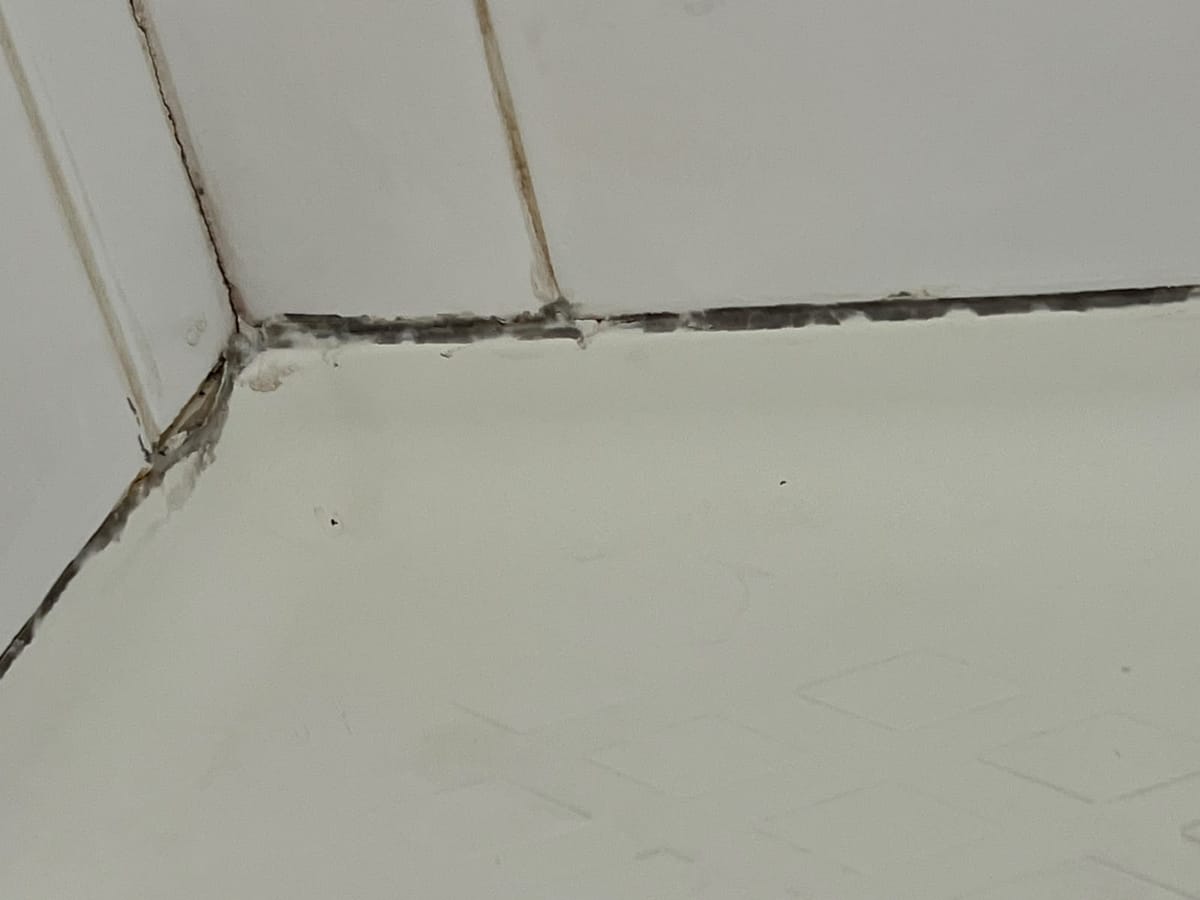
The Mechanics of Movement Joints in Residential Bathrooms
One of the most widespread defects discovered during bathroom leak inspections across Melbourne is rigid cement grout installed into internal 90-degree corners. Homeowners often notice a fine hairline crack running vertically up the corner of their shower recess, or a horizontal split along the junction where the wall tiles meet the shower floor.
This cracking is not a sign of poor grout quality; it is a fundamental violation of building physics. A residential building is a dynamic structure. Timber wall framing expands and contracts with changes in seasonal humidity. Concrete slabs deflect under shifting soil moisture in Melbourne’s outer suburbs. The two walls of a shower corner, and the wall-to-floor junction, represent planes that move independently of one another.
These junctions are classified under Australian building standards as "movement joints" (or expansion joints). Rigid materials cannot survive in movement joints. When two perpendicular planes move by even half a millimetre, a rigid cement joint cannot stretch. The immense shear and tensile forces inevitably crack the joint along its weakest plane, opening a direct moisture path.
Australian Standards: AS 3740 & AS 3958 Compliance
The requirement for flexible sealant in wet area internal junctions is explicitly codified in Australian Standards. AS 3958.1 (Guide to the installation of ceramic tiles) and AS 3740 (Waterproofing of domestic wet areas) mandate that all internal angles, junctions between different substrates, and junctions between walls and floors must incorporate flexible movement joints.
Specifically, AS 3958 recommends that movement joints have a minimum width and depth of 6mm, designed to accommodate at least 20% to 25% joint movement. Despite this clear standard, unskilled renovators and rushed builders frequently wipe cement grout straight through internal corners to save ten minutes of caulking time. Within 6 to 18 months, that rigid grout cracks, creating an open fissure that channels shower splash directly into the wall cavity.
Backing Rods and Preventing Three-Sided Adhesion
A critical engineering concept in movement joint design is avoiding "three-sided adhesion". If silicone sealant adheres to both tile faces and simultaneously bonds to the deep internal corner substrate or framing behind, the sealant cannot stretch properly. Instead of elongating like a rubber band between the two tiles, it experiences triaxial tension and tears down the centre.
To prevent this, commercial tradespeople install a closed-cell polyethylene foam backing rod or bond-breaker tape in deep corner gaps before dispensing silicone. This ensures the silicone only bonds to the two opposing tile edges, allowing it to stretch and compress freely as the building shifts with the seasons.
Choosing the Right Sealant: Neutral-Cure Sanitary vs Acetic Silicone
Not all silicones are created equal. Walking through a hardware aisle, homeowners are confronted with dozens of caulks, from cheap general-purpose fillers to polyurethane sealants. In wet area tile applications, using the wrong formulation creates premature failure.
Standard cheap silicones are "acetic cure" (identifiable by their sharp vinegar smell during application). While acetic silicone cures quickly, the released acetic acid can etch sensitive tile glazes, react negatively with mirror backings, and corrode aluminium shower frames. Furthermore, standard multi-purpose silicones lack active fungicides.
We specify commercial-grade neutral-cure sanitary silicone. Neutral-cure silicones release an alcohol or oxime byproduct during curing that is completely safe for tiles, acrylic tubs, and metal hardware. Crucially, sanitary formulations contain long-lasting biocide additives that inhibit black mould from rooting along the surface of the bead.
The Trade Method for Lasting Silicone Tooling
Applying bathroom silicone that lasts five to seven years requires strict surface preparation. Squeezing fresh caulk over an existing mouldy bead will quickly fail within weeks because silicone cannot adhere to degraded silicone.
The first step is complete mechanical removal. We slice out the old bead using specialised non-scratch blades, taking care not to chip tile edges. The joint is then treated with a chemical silicone digester to dissolve microscopic silicone films, followed by a mould-neutralising rinse.
Next, the joint must be thoroughly degreased with high-purity isopropyl alcohol and dried. Any residual soap scum, body oil, or moisture will prevent the silicone from achieving chemical adhesion. Finally, the silicone is extruded into the joint and tooled with dedicated profiling blocks into a neat, smooth concave bead that directs water away from the corner.
When Silicone Failure Masks Structural Framing Movement
In rare instances, a silicone bead will tear repeatedly within a few months of application. When this occurs, it indicates excessive structural movement behind the wall. In older timber-framed homes on timber stumps (common in suburbs like Frankston and Mornington), rotten subfloor timbers or inadequate framing bracing can cause walls to flex excessively when someone steps into the shower.
If the joint movement exceeds the elongation capacity of commercial silicone (typically 20% to 25% movement capability), no sealant can hold. In such cases, an honest tradesperson will inspect the subfloor and advise whether structural carpentry repairs are needed before resealing.
Honest Trade Advice: Waterproofing Membranes vs. Regrouting
Regrouting and perimeter silicone replacement restore damaged, porous, or mouldy joints. However, regrouting addresses grout-level water ingress but cannot repair or restore a failed waterproofing membrane. Under Australian building standards (AS 3740), internal waterproofing membranes sit beneath the screed and tile bed. If that membrane or structural substrate has failed, regrouting alone cannot fix an underlying leak. We provide clear, honest assessments from photos and on-site checks so you only pay for what actually solves the problem.
Trade Summary
Internal shower corners must always be sealed with high-grade neutral-cure sanitary silicone, never rigid grout. If your shower corners have cracked grout or mouldy, peeling caulk, contact Tile Seal Pro Regrout for clean, precision trade resealing.